Market discovery by region
CloudRaven built a repeatable market-scan lane to identify local IT service providers, normalize company records, and assemble a credible first list for regional partner review.
For Laplink's PCmover technician licensing offer, CloudRaven ran a research-led program to find regional IT service providers, qualify partner-fit accounts, and prepare reviewable outreach and onboarding materials. The value of the engagement was not just lead generation. It was a usable operating model for turning market discovery into partner-ready action with evidence intact.
Pilot scope
30-day channel pilot
Operating model
Discovery, qualification, activation
Program value
Evidence-backed partner pipeline

Case study view
CloudRaven built a repeatable market-scan lane to identify local IT service providers, normalize company records, and assemble a credible first list for regional partner review.
Each account moved through contact research, enrichment, and evidence capture so the team could decide which providers were worth pursuing without guessing from sparse data.
Approved findings turned into reviewable outreach drafts, partner notes, and onboarding context so activation could continue without losing the reasoning behind the recommendation.
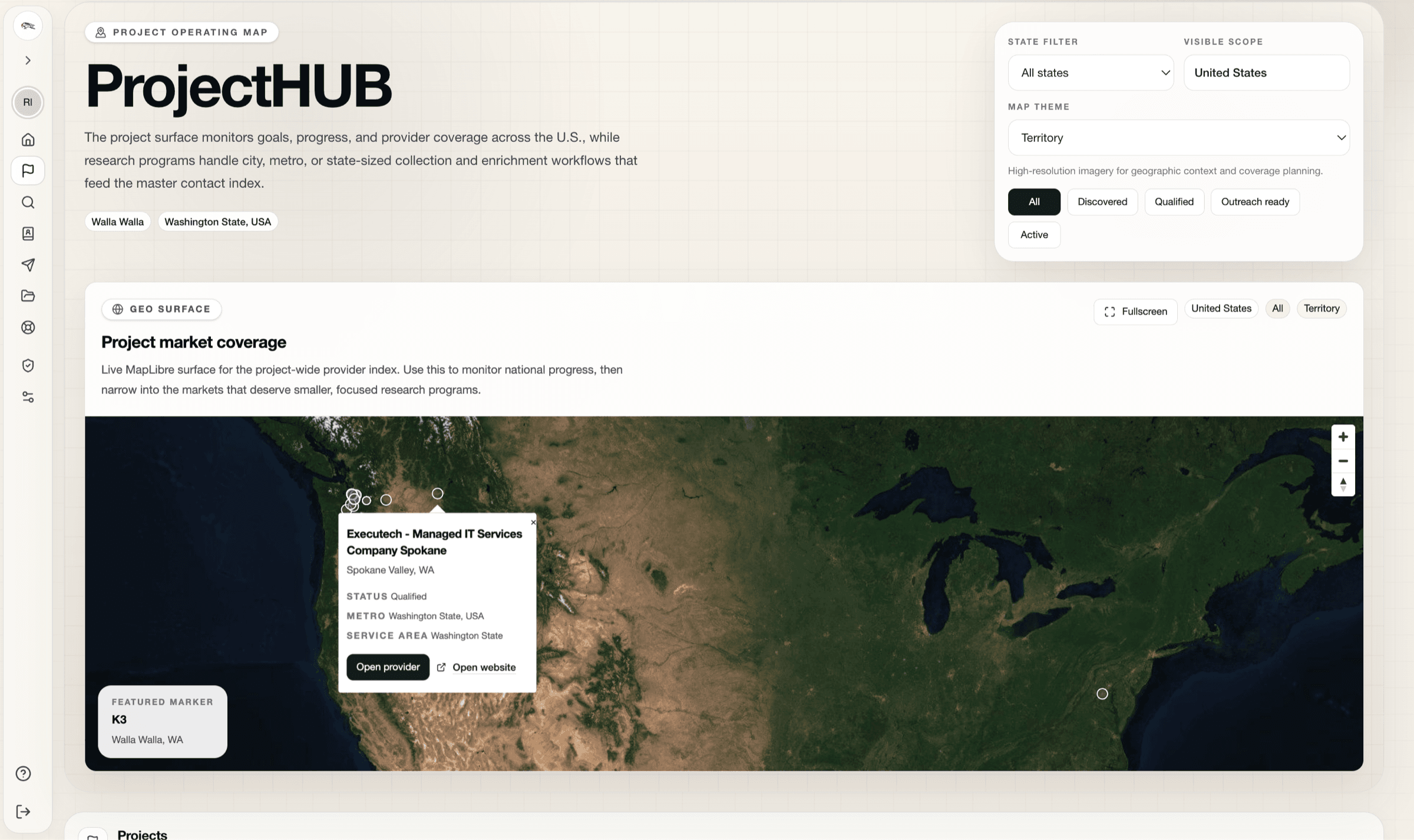
Market coverage
Regional targeting stayed visible and reviewable
The engagement started with a clear market map so Laplink could see where partner coverage was forming, where whitespace remained, and which local regions deserved deeper research.
Program operations
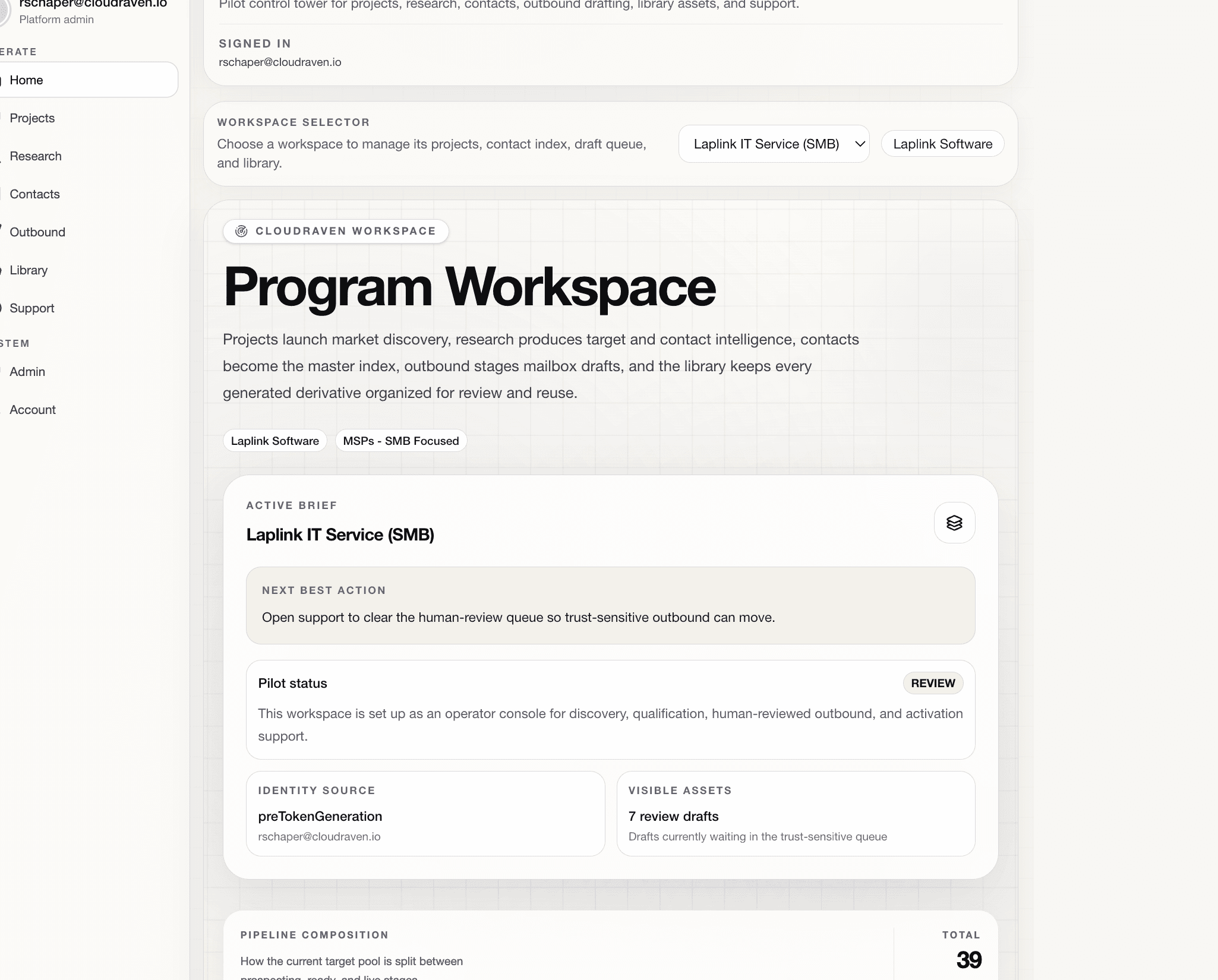
Research, review, and approvals lived in one operating lane
Instead of fragmenting the work across lists and drafts, the program kept queue state, approval checkpoints, and account context aligned so operators could move quickly without losing trust.
Activation inputs
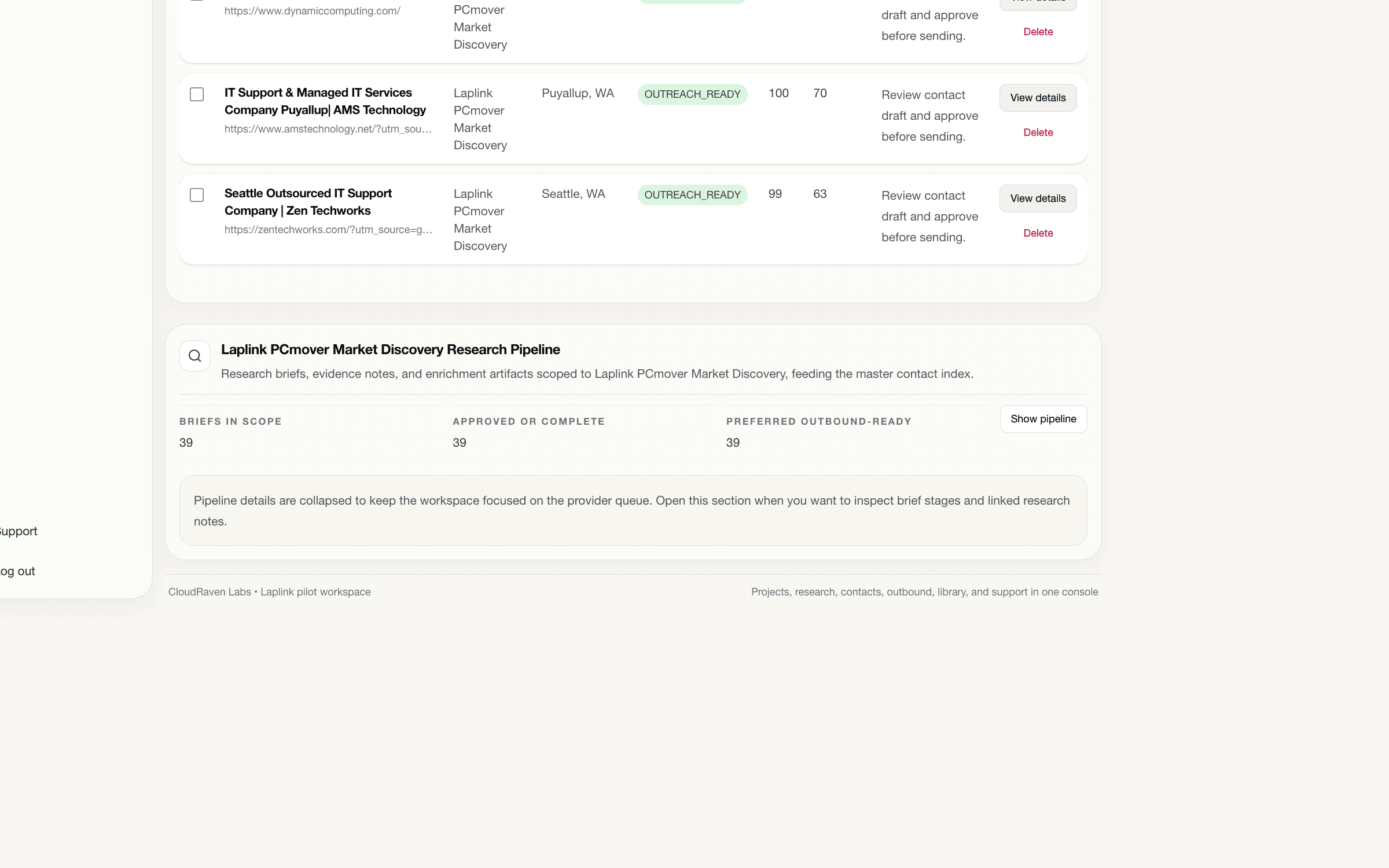
Research outputs became usable partner materials
Qualification notes, approved drafts, and onboarding context gave Laplink more than raw findings. They created practical materials the next team could immediately use.
Program materials
Partner field
The target market was grounded in real provider context
The program focused on actual IT service businesses, giving the research lane a concrete partner profile instead of an abstract growth persona.

Approval flow
Outreach remained reviewable before it became customer-facing
The value of the workflow was disciplined handoff: recommendations could be approved, revised, and released with the supporting context still attached.

Partner enablement
The program carried through to first-project readiness
Research only mattered if it translated into action, so the final outputs supported onboarding and early partner enablement rather than stopping at top-of-funnel qualification.